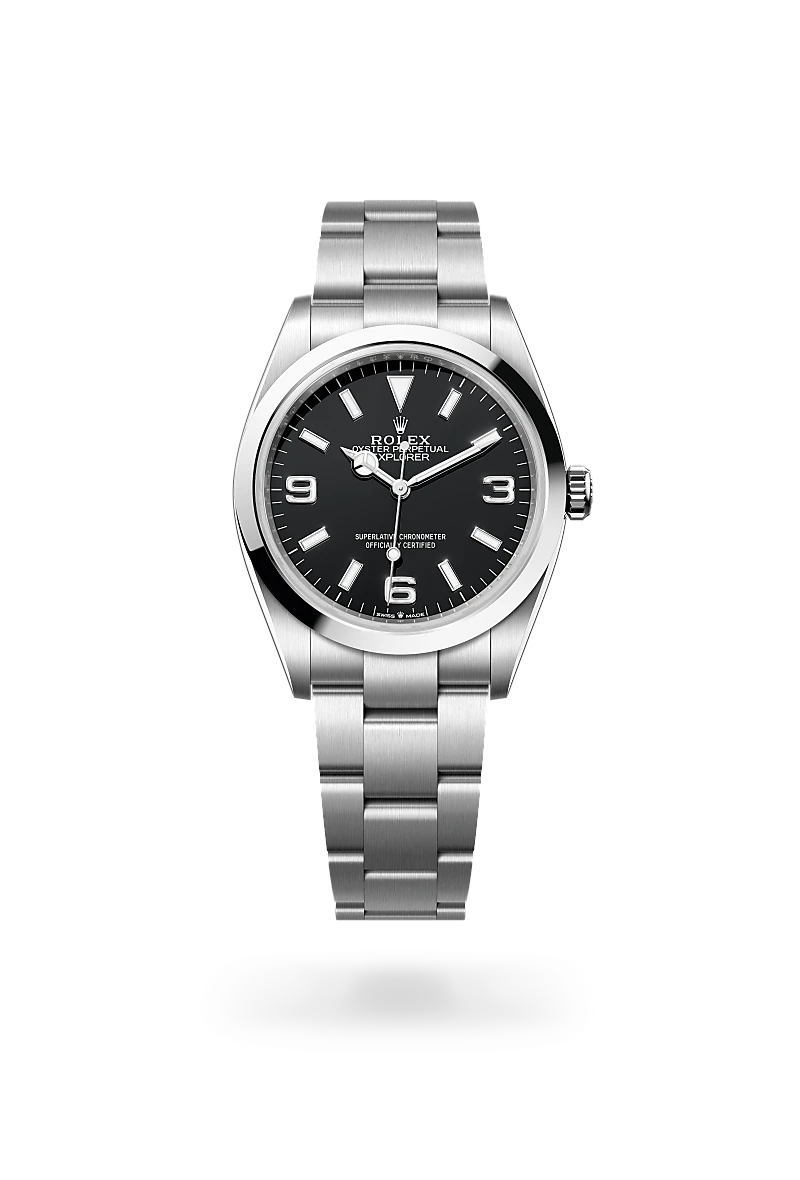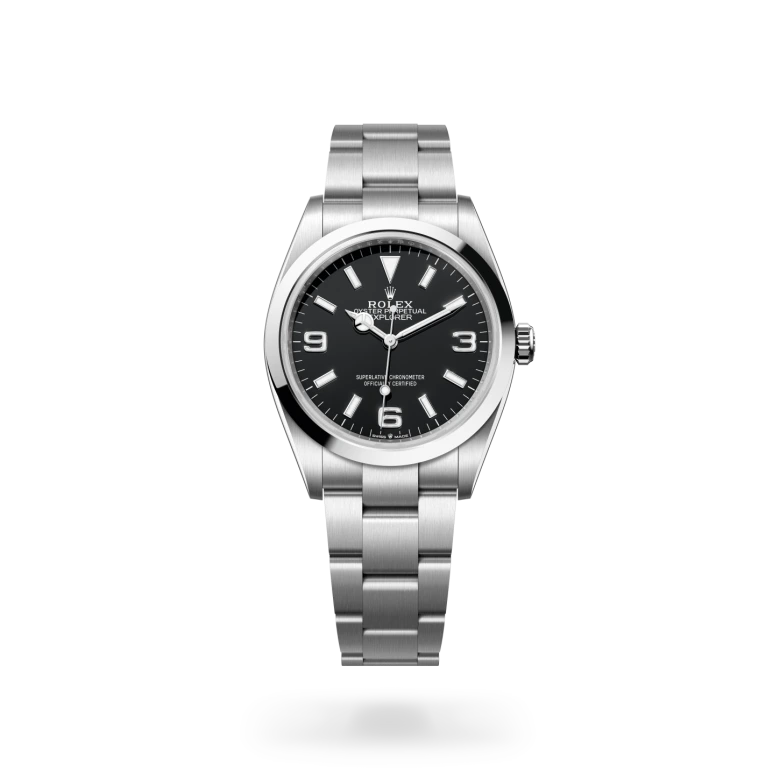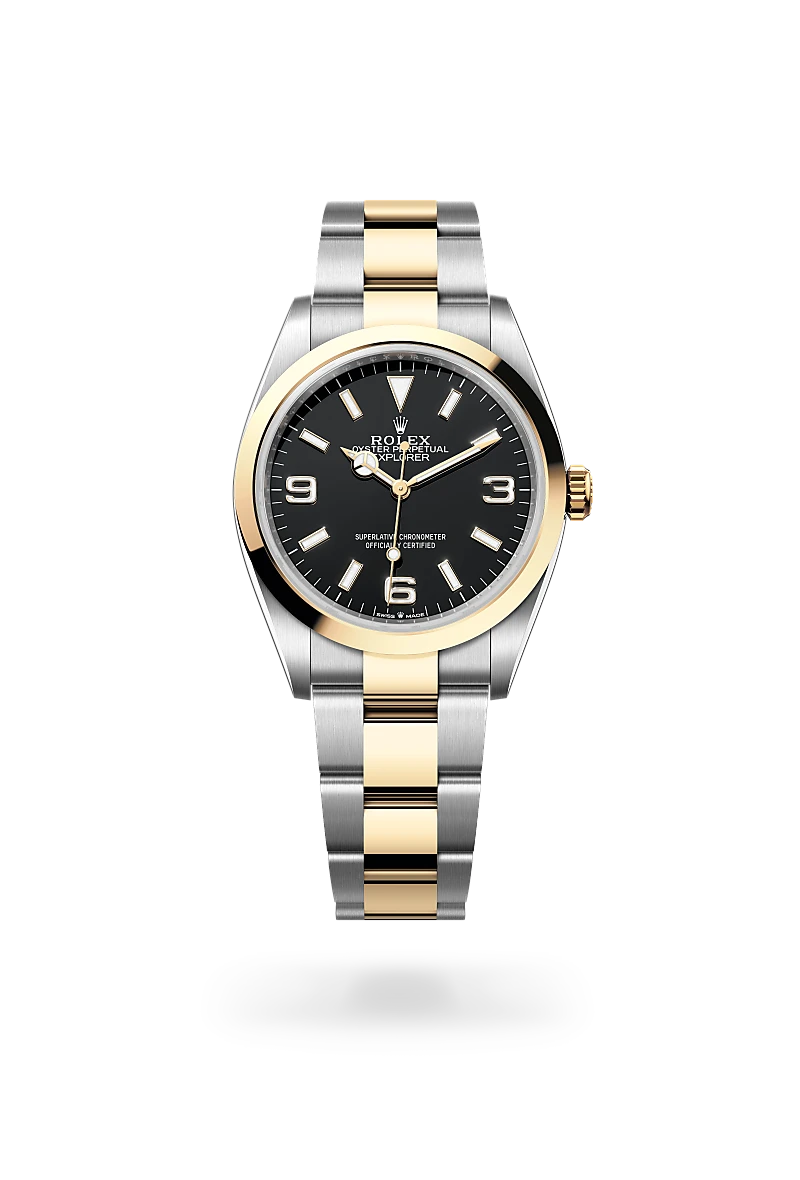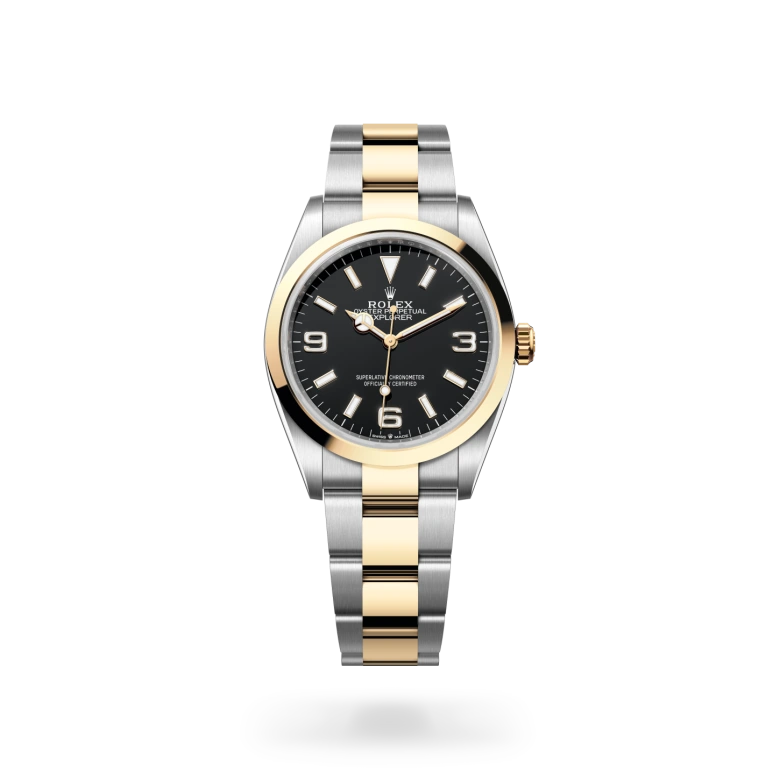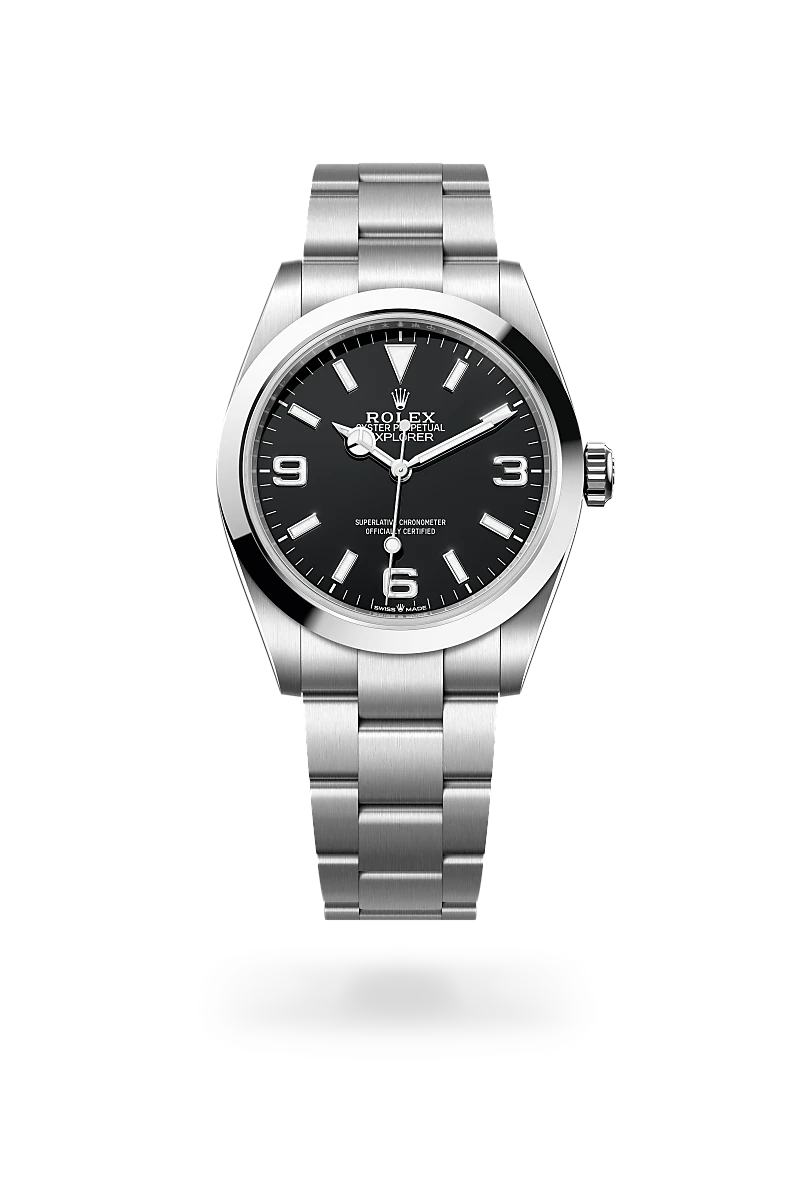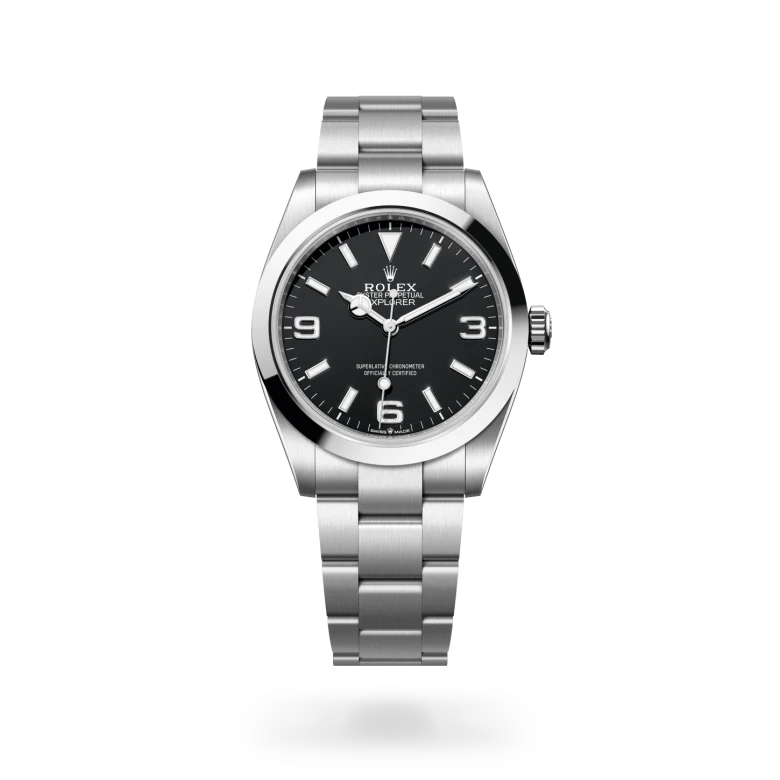





The Oyster Perpetual Explorer evolved from Rolex's deep involvement with exploration.
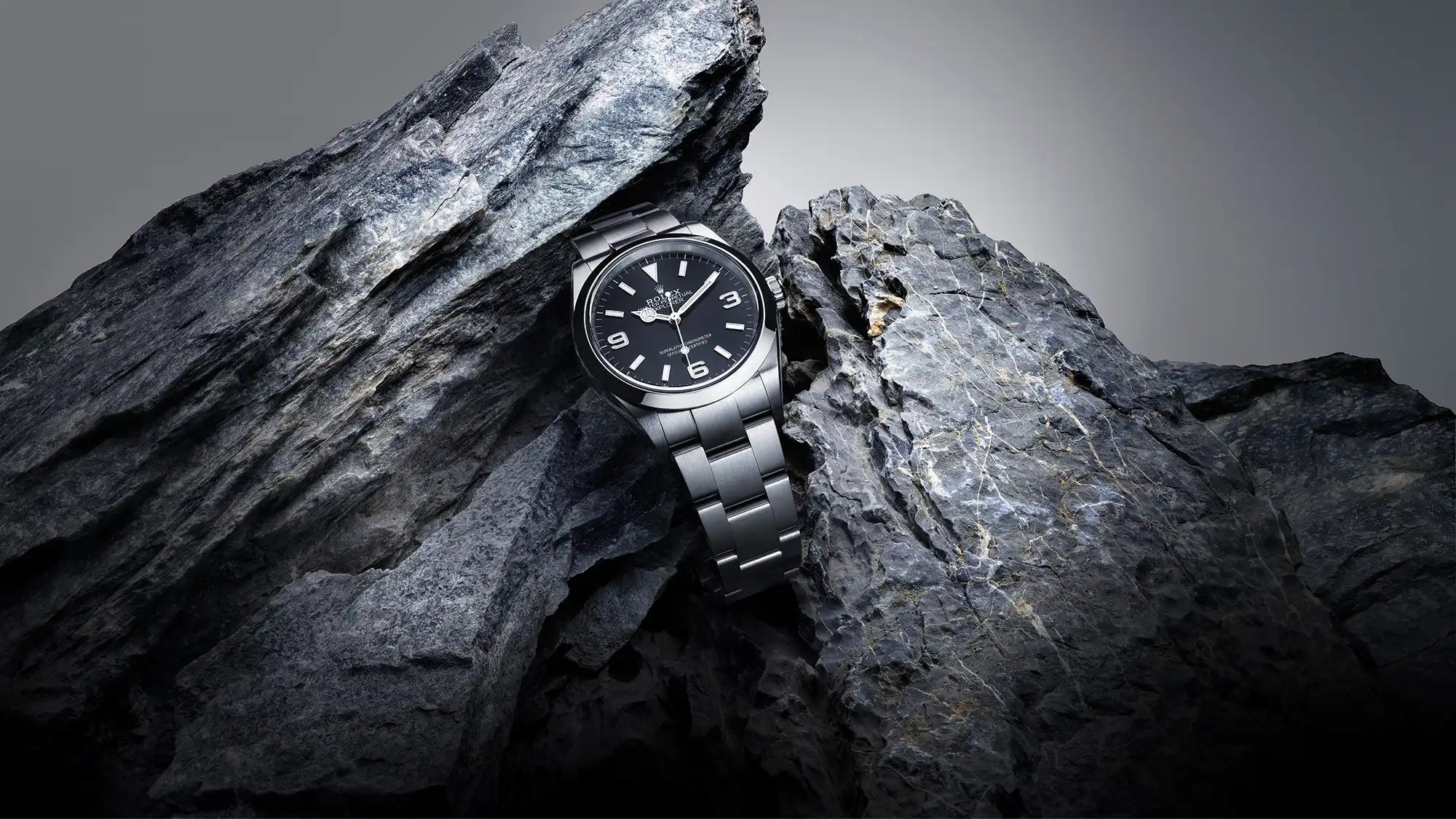
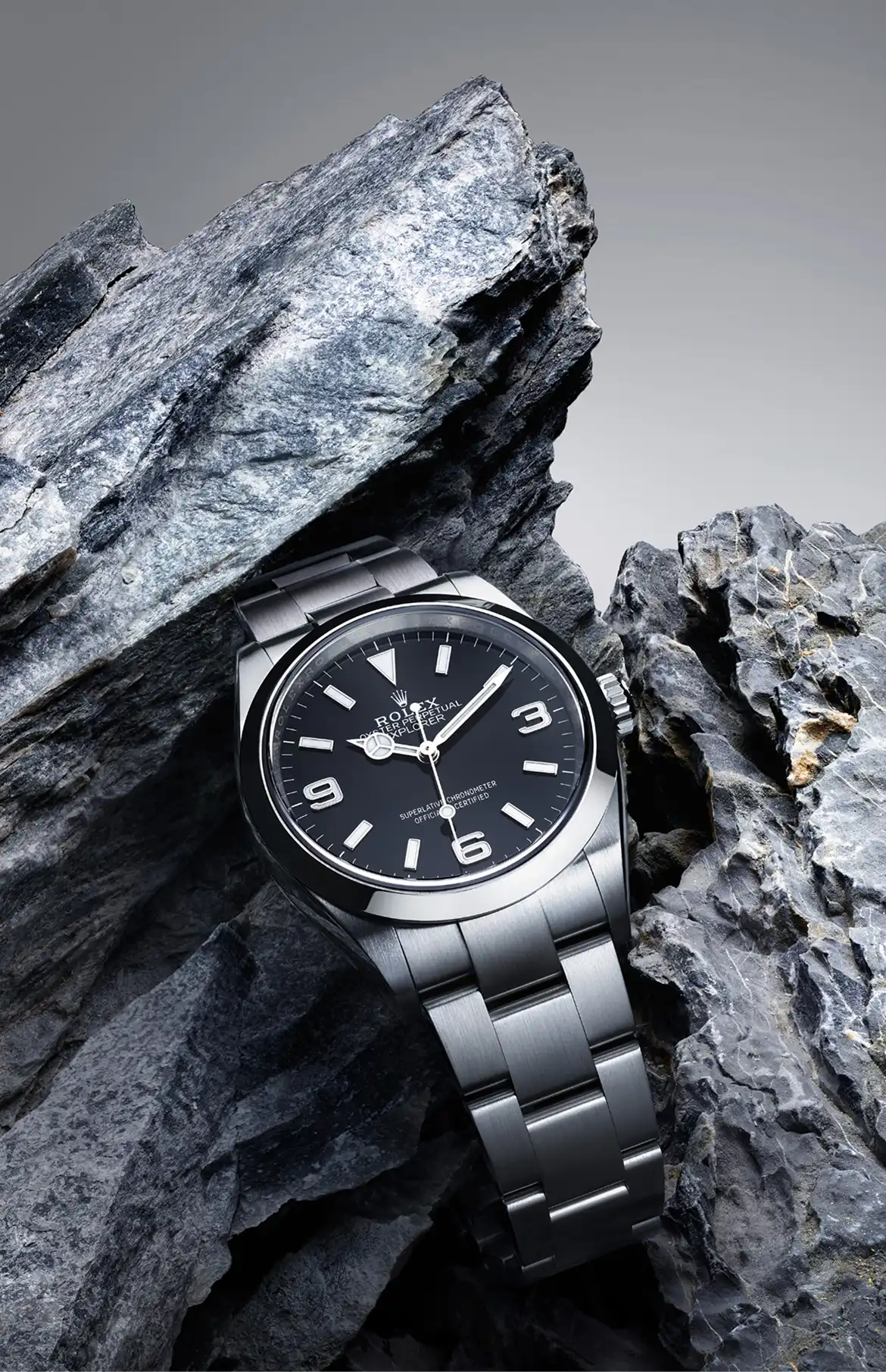
From the 1930s, Rolex began to equip numerous expeditions with Oyster Perpetual watches. The feedback received was used to develop what became known as the Professional category: watches that serve as tools, such as the Explorer. Rolex watches have taken part in some of humanity's greatest adventures. One such occasion was the 1953 expedition to Everest, led by Sir John Hunt, on which Sir Edmund Hillary and Tenzing Norgay become the first to summit the world's highest mountain.

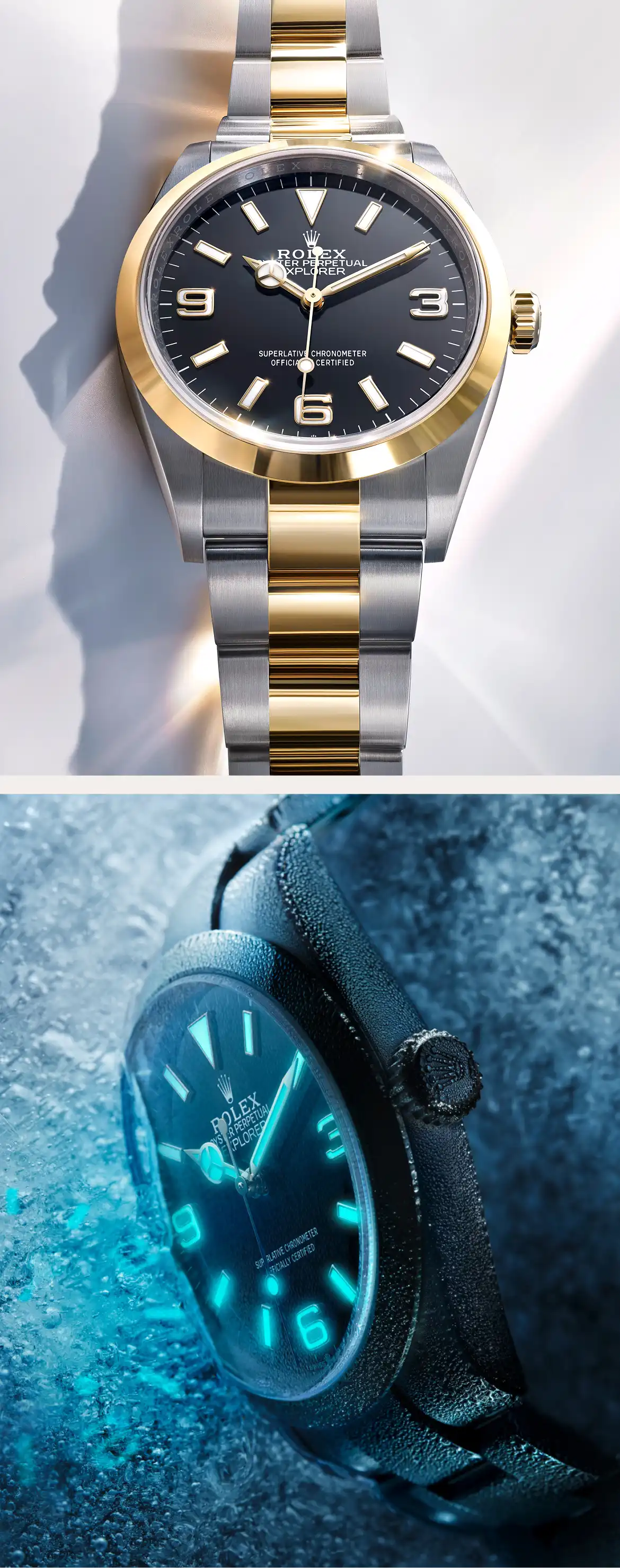
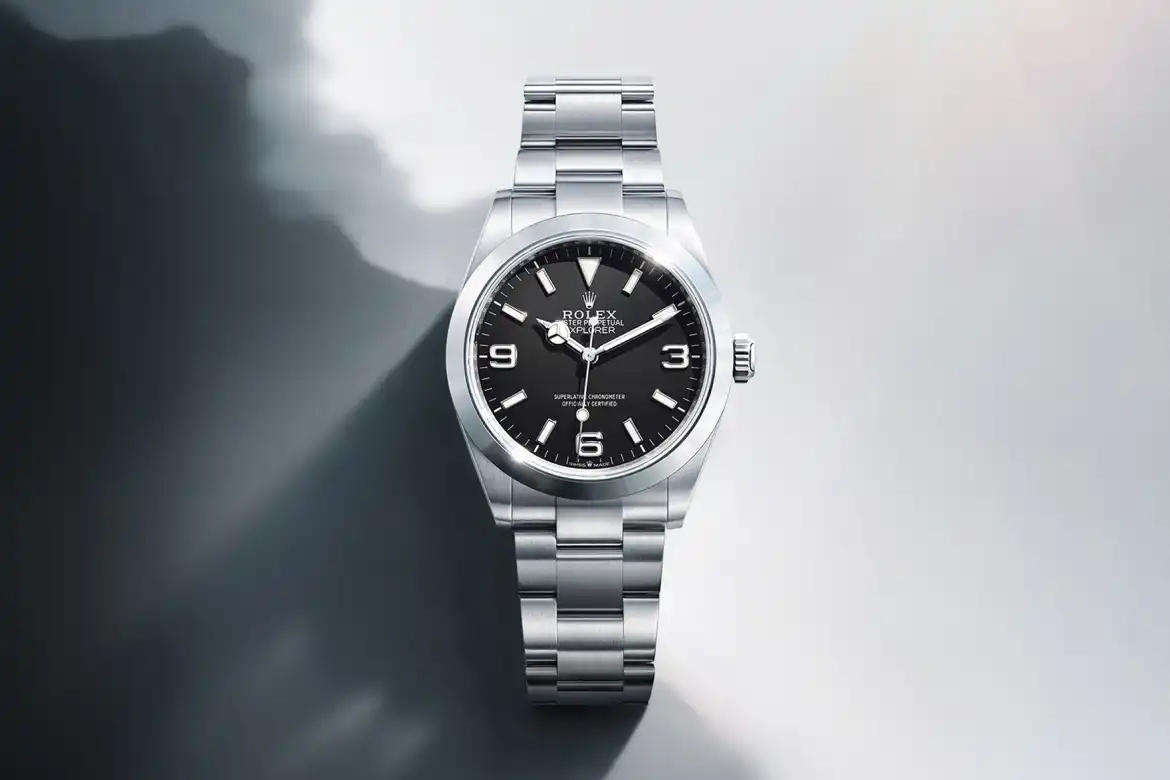
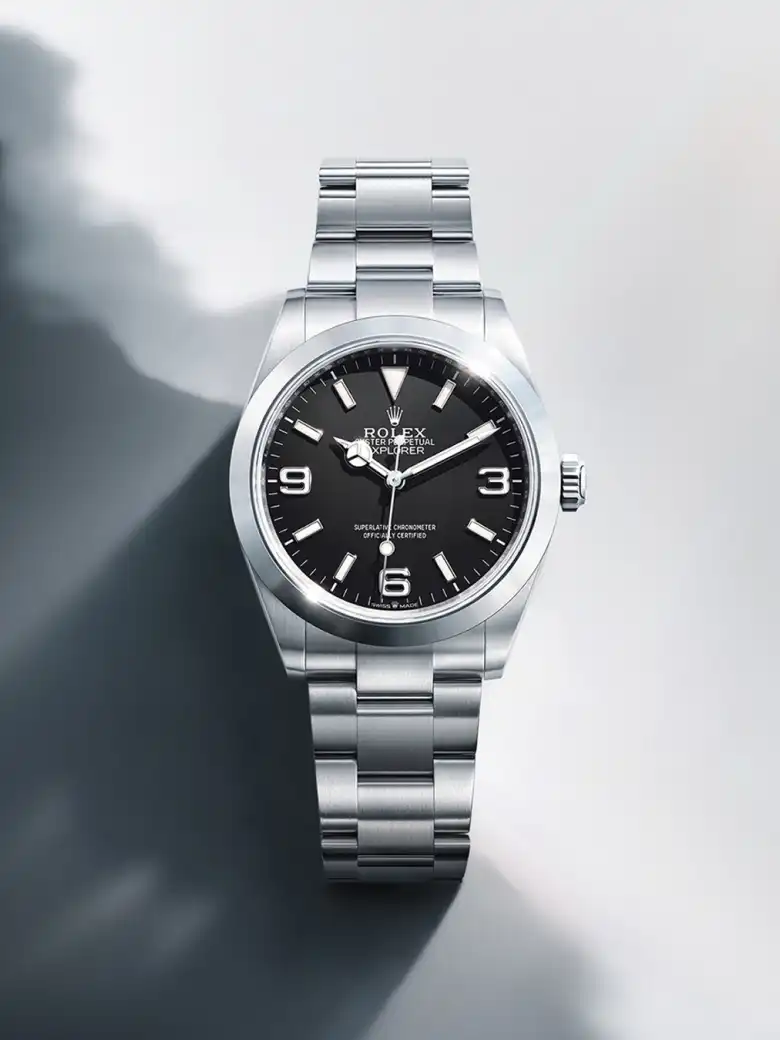
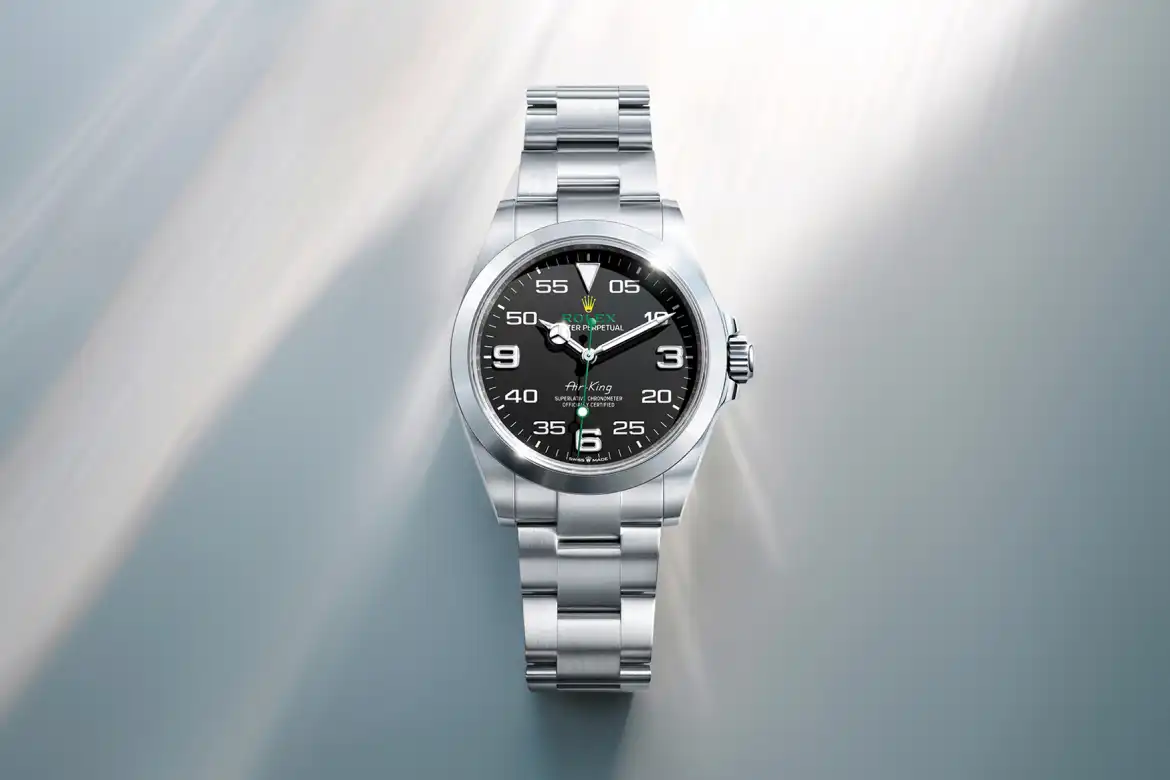
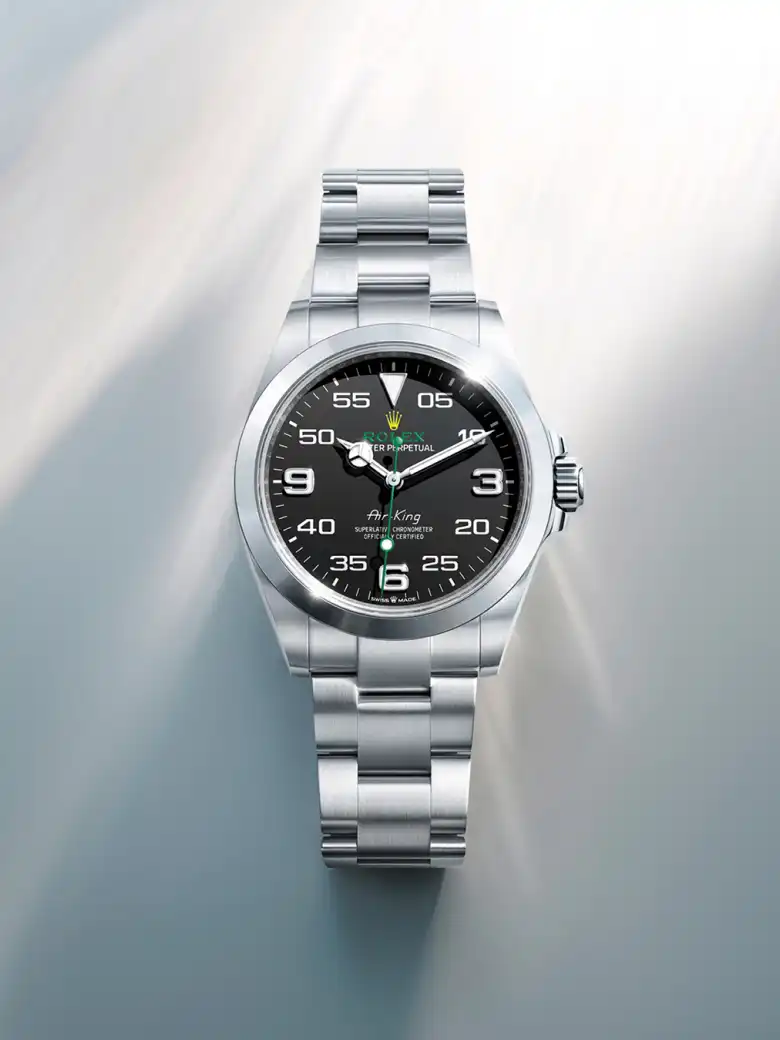
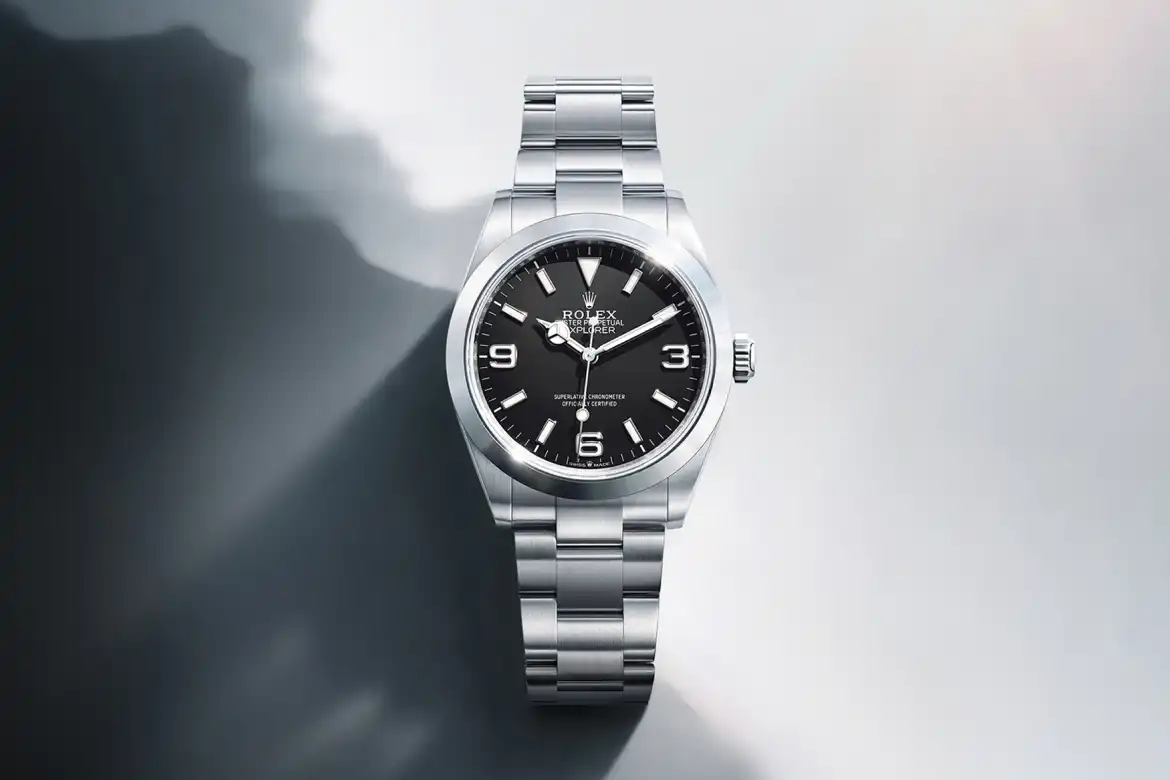
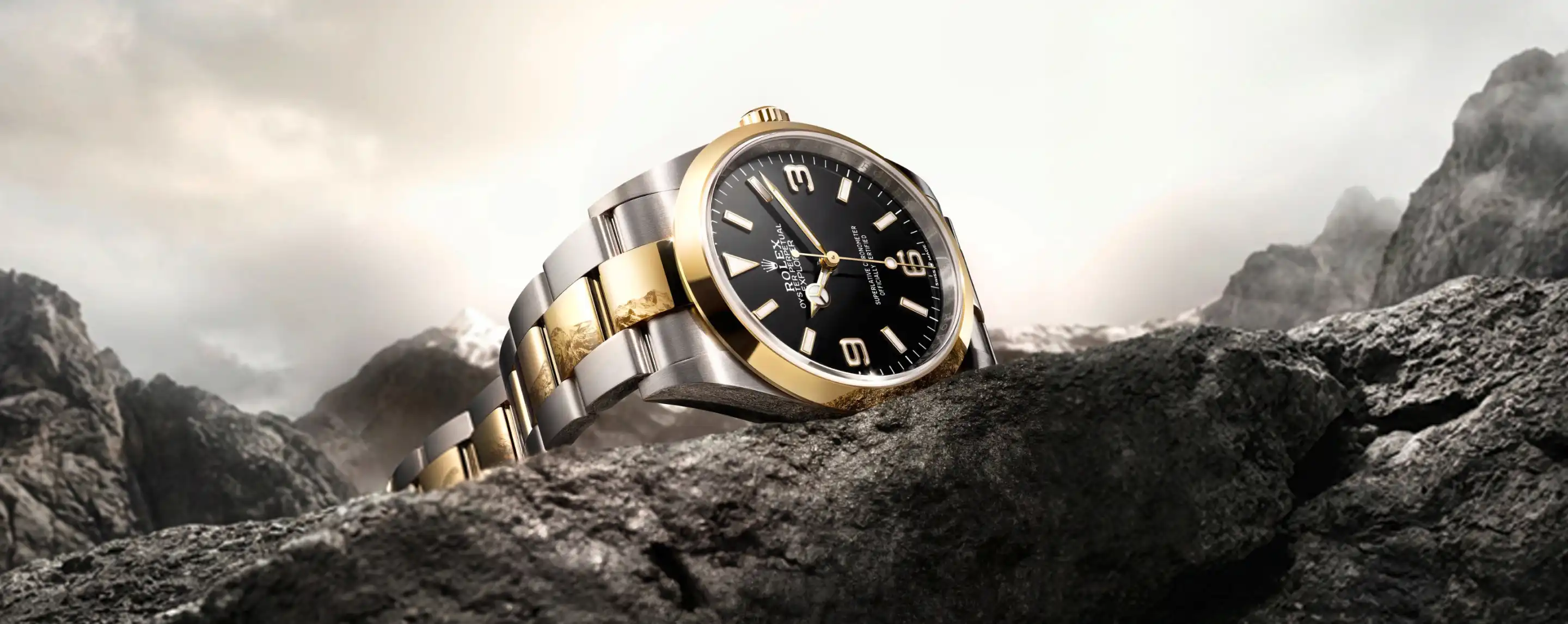
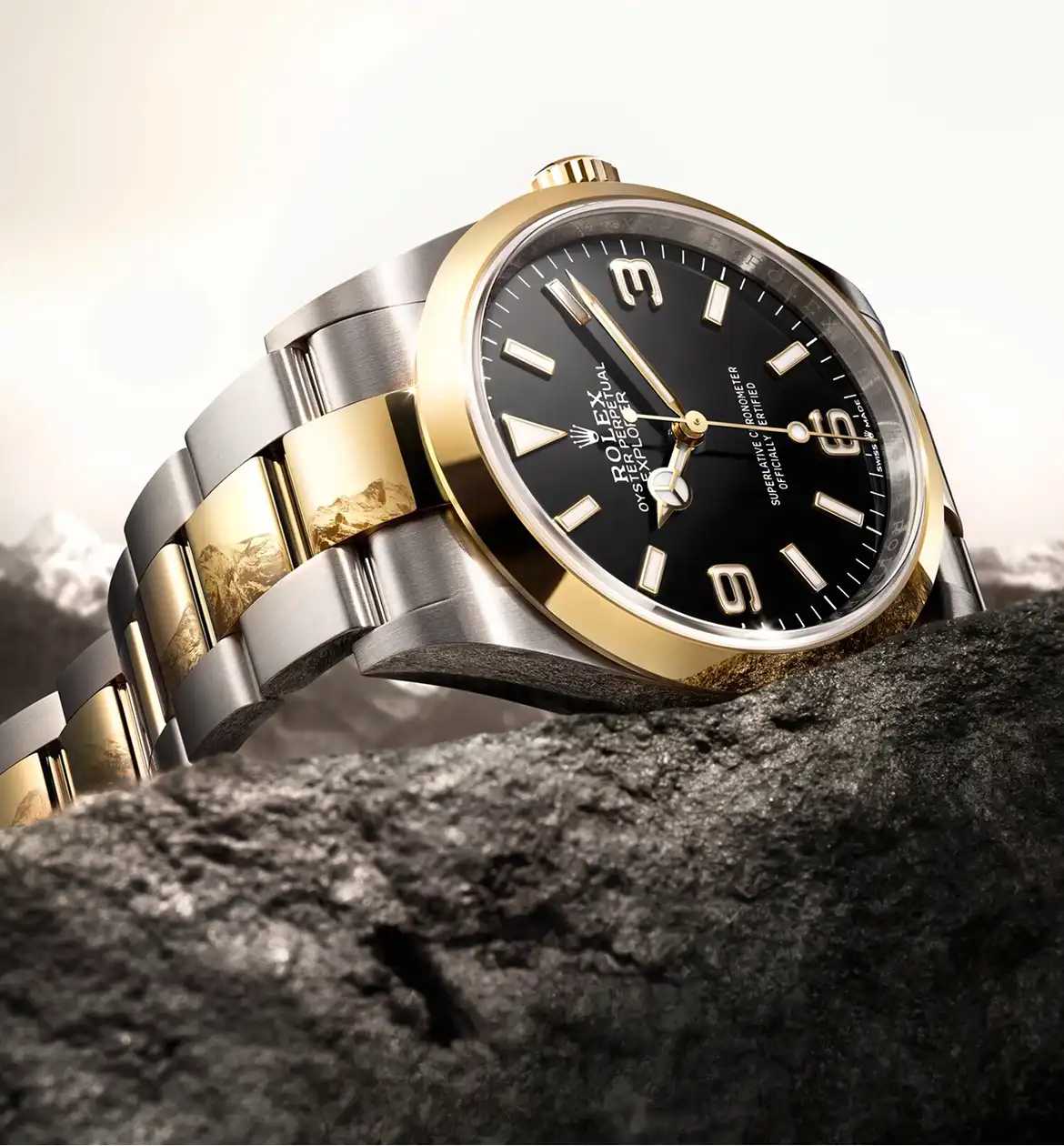
The Explorer, launched in 1953, sets itself apart with a simple design and a highly legible black dial with characteristic 3, 6 and 9 numerals and large index hour markers. It is a tool watch, created to tell time accurately, whatever the circumstances. Even in the dark, the dial is easy to read, thanks to the Chromalight display. Today, the Explorer is available in a 36 mm diameter – the size of the 1953 original model – as well as in a 40 mm diameter.
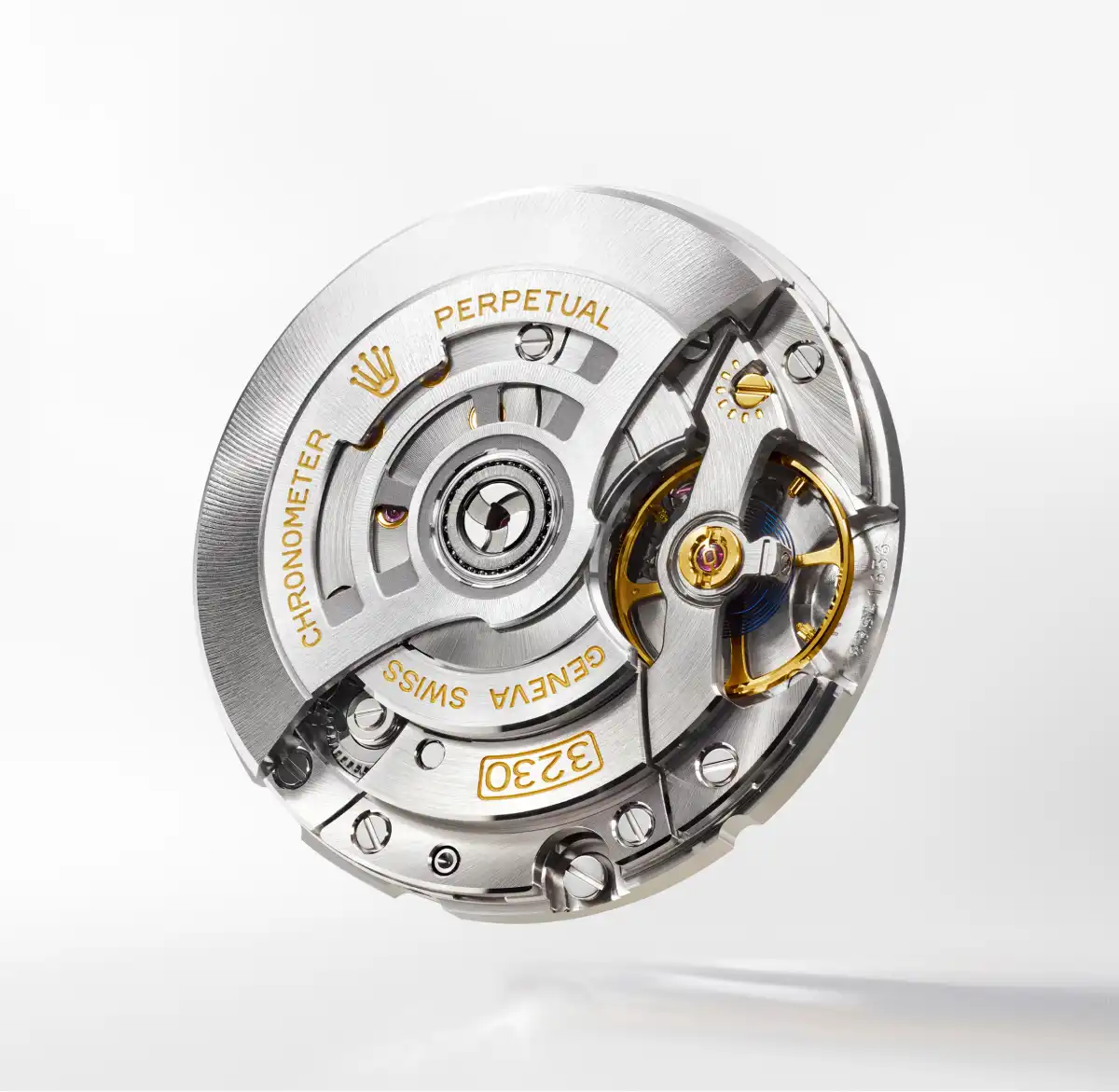
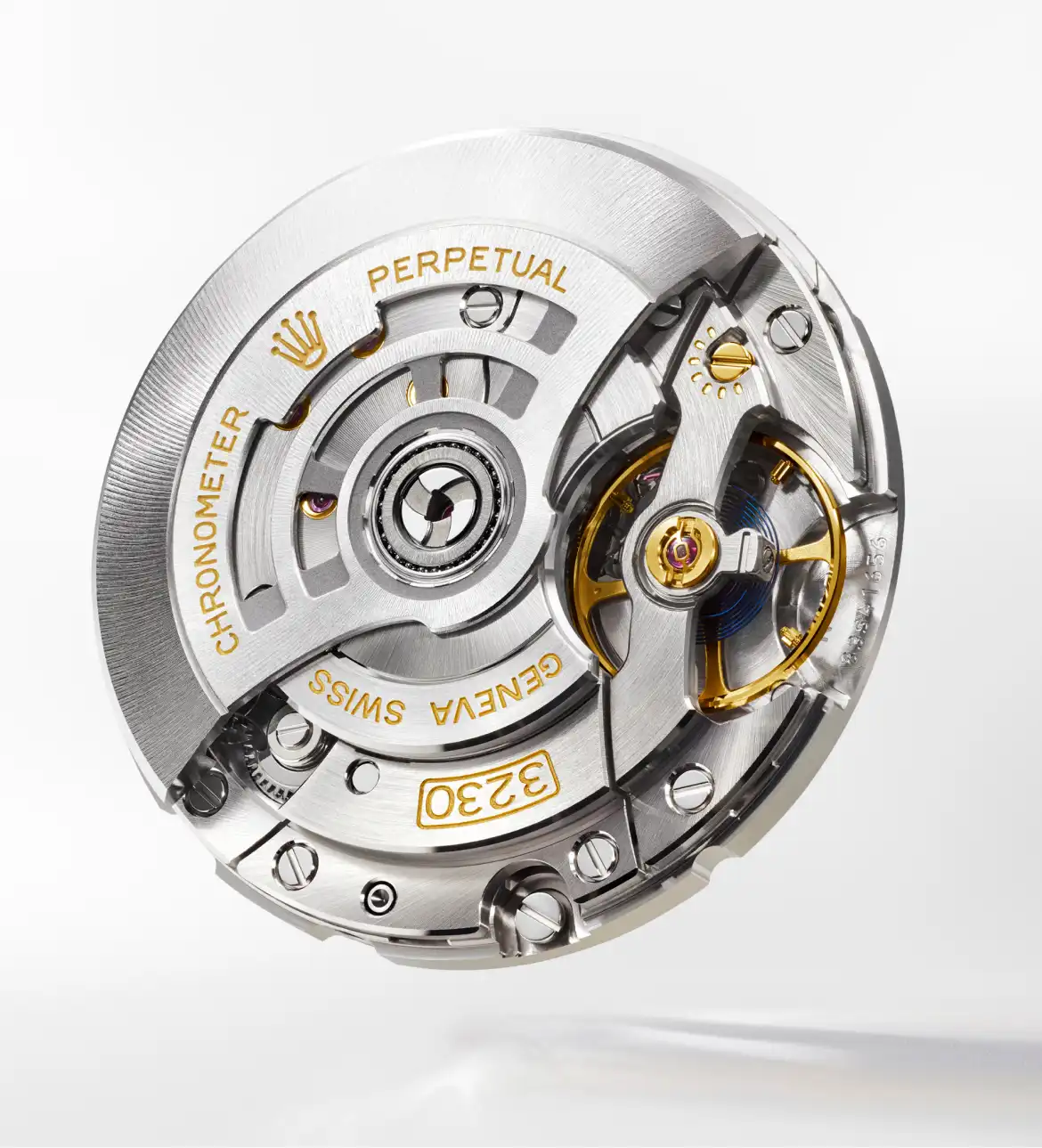
The Explorer 36 and Explorer 40 are equipped with calibre 3230, a self-winding mechanical movement entirely developed and manufactured by Rolex. A consummate demonstration of technology, this movement carries a number of patents. It offers outstanding performance, particularly in terms of precision, power reserve, convenience and reliability.
The Explorer 36 and Explorer 40 are equipped with calibre 3230, a self-winding mechanical movement entirely developed and manufactured by Rolex. A consummate demonstration of technology, this movement carries a number of patents. It offers outstanding performance, particularly in terms of precision, power reserve, convenience and reliability.